
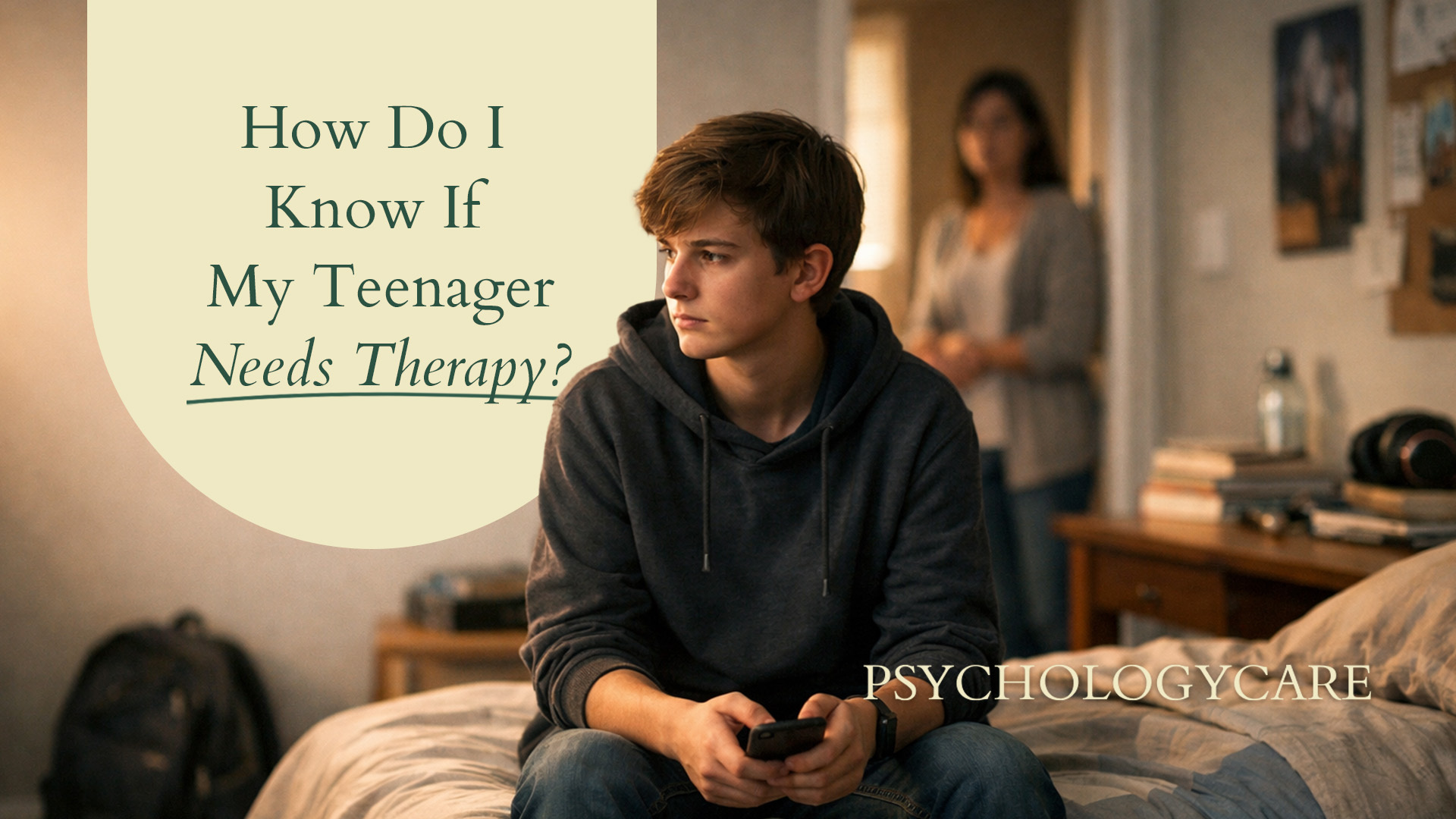
How Do I Know If My Teenager Needs Therapy?
There’s a stage in parenting that can feel quietly confusing. Your once talkative child becomes more private. Moods shift quickly. Doors close more often. You find yourself wondering, “Is this just normal teenage behaviour, or is something more going on?”
It’s one of the most common questions parents ask. Adolescence is a time of enormous change. Hormones fluctuate. Identity forms. Social pressures increase. Independence grows. Emotional intensity can rise. Some level of moodiness, privacy, and pushback is developmentally expected.
But sometimes what we’re seeing isn’t just common growing up. Sometimes it’s distress. The challenge is knowing the difference.
Teenagers don’t always say, “I’m struggling.” In fact, many won’t. Emotional pain in adolescence often shows up sideways. Instead of sadness, you might see irritability. Instead of anxiety, you might see avoidance. Instead of overwhelm, you might see anger or shutdown.
So how can you tell when therapy might help?
One of the first things to notice is change. Has your teen’s behaviour shifted significantly from their usual personality? A teen who once enjoyed socialising may suddenly withdraw from friends. A previously motivated student might begin avoiding school or missing assignments. A confident teen may become unusually self critical.
Look for patterns that persist rather than passing moods. Everyone has bad days. But if your teenager has been consistently flat, anxious, angry, withdrawn, or overwhelmed for several weeks, that’s worth paying attention to.
Sleep changes can also be a sign. Teens naturally stay up later, but drastic insomnia, sleeping excessively, or frequent nightmares may indicate anxiety or depression. Changes in appetite, sudden weight shifts, or loss of interest in previously enjoyed activities can also signal deeper distress.
Another red flag is avoidance. If your teen is increasingly avoiding school, social events, sport, or family interactions due to fear or overwhelm, therapy can help uncover what’s driving that pattern. School refusal in particular has increased significantly in recent years, often linked to anxiety, social stress, perfectionism, or learning difficulties.
Emotional intensity is another area to consider. All teenagers experience strong feelings, but if your teen struggles to regulate emotions, has explosive outbursts, prolonged shutdowns, or difficulty calming once upset, they may benefit from learning practical emotional regulation skills.
Talk of hopelessness, Self-harm, or comments about not wanting to be here should always be taken seriously. Even if expressed casually or followed by “I was just joking,” these statements deserve gentle, calm attention. If you ever feel concerned about your teen’s immediate safety, urgent support should be sought.
Sometimes the signs are more subtle. You might notice:
A constant underlying anxiety
Perfectionism that feels rigid or self punishing
Frequent headaches or stomach aches with no medical explanation
Ongoing friendship drama or social isolation
Gaming or screen use that feels more like escape than enjoyment
Persistent low self esteem
Parents often hesitate to seek therapy because they worry about overreacting. But therapy is not reserved for crisis. It can be preventative. It can provide tools before problems escalate. It can give your teen a safe space to talk freely without worrying about disappointing you.
Many teenagers speak more openly to a psychologist because it feels neutral. They’re not trying to protect their parents from worry. They’re not navigating sibling dynamics. They can say what they really think.
In therapy, teens can learn how to understand their emotions rather than be controlled by them. They build skills in managing anxiety, challenging unhelpful thoughts, navigating friendships, setting boundaries, and communicating more effectively at home.
Parents are often gently involved in the process as well. Not in a way that breaches confidentiality, but in a way that strengthens understanding. You might learn how to respond differently to shutdowns. How to support anxiety without reinforcing avoidance. How to rebuild connection when communication has broken down.
A common concern parents have is, “What if my teen refuses to go?” That’s understandable. Therapy works best when teens feel some ownership. Sometimes framing it as support rather than fixing helps. You might say, “We’ve noticed you’ve been carrying a lot lately. We’d love you to have someone who’s just for you.”
You know your teenager better than anyone. If something feels off, it’s okay to explore support. Seeking therapy does not mean you’ve failed as a parent. It means you’re responsive.
Adolescence is a season of growth, but growth can be messy. With the right support, teens often emerge more resilient, self aware, and emotionally capable. And parents often feel more confident in how to respond.
At PsychologyCare, we work alongside families to help teenagers feel understood, equipped, and supported. If you’d like to talk through what you’re seeing and whether therapy might help, we’re here to guide you gently through the next step.







 HealthShare