
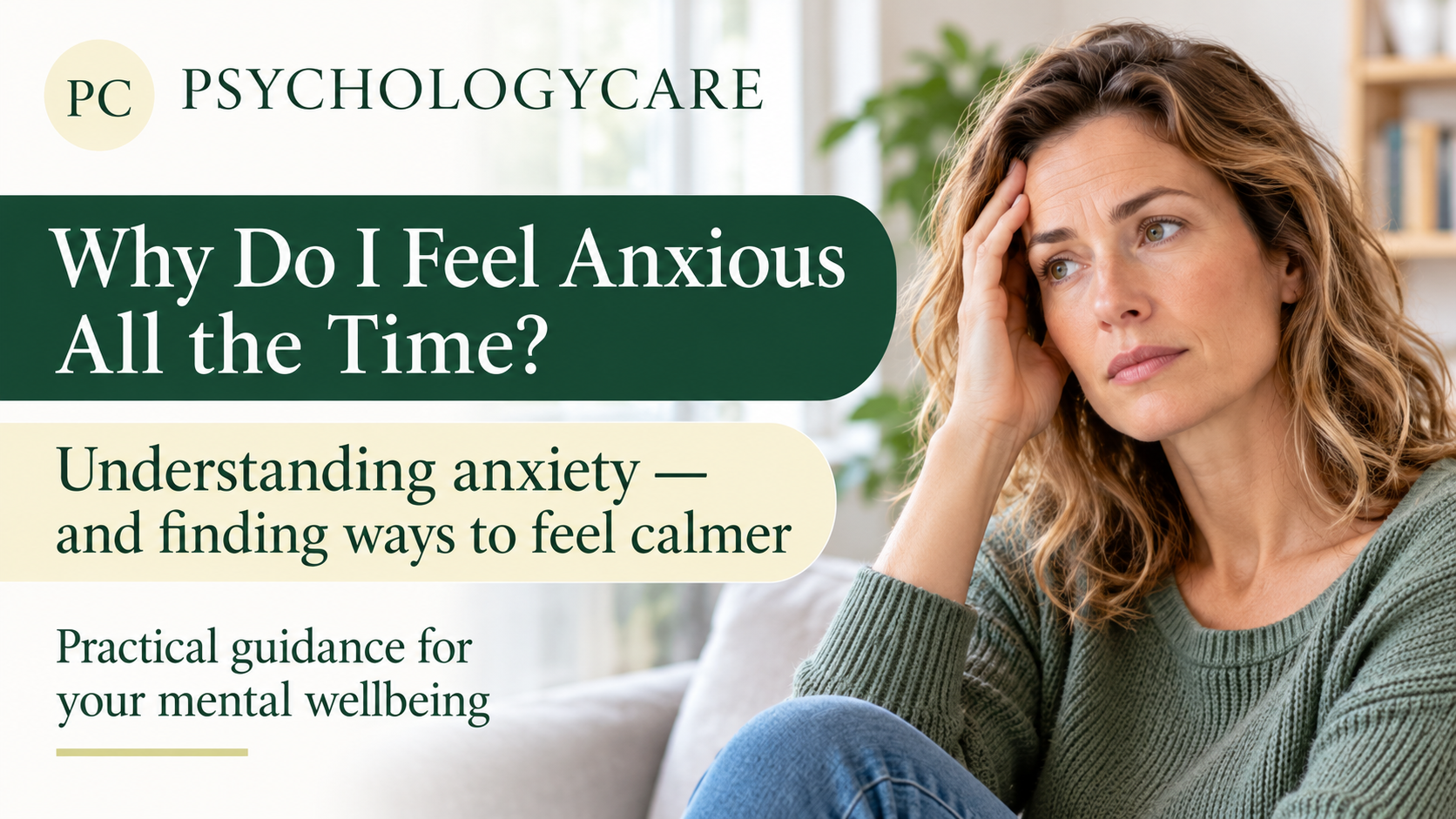
Have you ever found yourself feeling anxious even when there doesn’t seem to be anything particularly wrong? Perhaps you wake up worrying about the day ahead, find yourself constantly thinking about things that might go wrong, or struggle to relax even when you have time to yourself.
You may find that your mind is always working, anticipating problems, replaying conversations or preparing for the worst. Even when things are going well, it can feel difficult to switch off.
If you feel anxious all the time, you are not alone. Anxiety is a common human experience, but when it becomes persistent, overwhelming or begins interfering with your everyday life, it is worth understanding what may be causing it.
Anxiety is your mind and body’s natural response to perceived danger, uncertainty or stress. It is designed to help you recognise potential threats and prepare to respond to them.
When you encounter a stressful situation, your brain activates a protective response often described as the “fight or flight” response. Your body may release stress hormones, your heart rate may increase, your muscles may tense, and your attention may become focused on whatever you perceive as a threat.
This response is useful when you genuinely need to react to danger. However, sometimes the brain’s alarm system becomes overly sensitive.
Instead of switching off when the stressful situation passes, it may remain activated. You might begin anticipating problems that haven’t happened, worrying about things outside your control, or interpreting ordinary situations as potentially threatening.
Over time, this can create a cycle in which anxiety itself becomes a source of further worry.
Anxiety affects people in different ways. Some people primarily experience anxious thoughts, while others notice physical symptoms or changes in their behaviour.
Emotional and psychological symptoms
You may experience:
Physical symptoms of anxiety
Anxiety can also affect your body. Common physical symptoms include:
These symptoms can sometimes be frightening, particularly when they appear unexpectedly. Anxiety can produce very real physical sensations, but it is important not to assume that every physical symptom is caused by anxiety. New, severe or concerning physical symptoms should be assessed by a medical professional.
One of the most frustrating aspects of anxiety is the feeling that you cannot control your thoughts.
You may worry about your health, finances, family, work, relationships or the future. When one concern is resolved, another may quickly take its place.
This can happen because worrying creates the illusion that you are preparing for danger or preventing something bad from happening.
For example, you might think:
Unfortunately, excessive worrying rarely provides lasting reassurance. Instead, it can keep your mind focused on uncertainty and reinforce the belief that everything needs to be anticipated or controlled.
Learning to tolerate uncertainty, rather than trying to eliminate it completely, is often an important part of managing anxiety.
There is rarely one single explanation for why someone experiences persistent anxiety. It may develop through a combination of life experiences, personality characteristics, stress, learned patterns of thinking and biological factors.
Ongoing pressure at work, financial difficulties, family responsibilities, relationship problems or uncertainty about the future can leave you feeling constantly on alert.
When stress continues for long periods without adequate recovery, it may become increasingly difficult to relax and feel emotionally settled.
Anxiety often involves imagining the worst possible outcome.
A minor problem may become a major catastrophe in your mind. A small mistake may lead you to worry about losing your job, damaging a relationship or disappointing others.
These thought patterns can intensify emotional distress, even when the worst-case scenario is unlikely to occur.
People who place very high expectations on themselves may feel anxious about making mistakes, disappointing others or not performing well enough.
The pressure to get everything right can make even everyday tasks feel stressful.
Previous experiences of trauma, instability, loss, criticism or difficult relationships may influence how safe you feel in the present.
Sometimes your nervous system remains alert to threats even when your current circumstances are relatively safe.
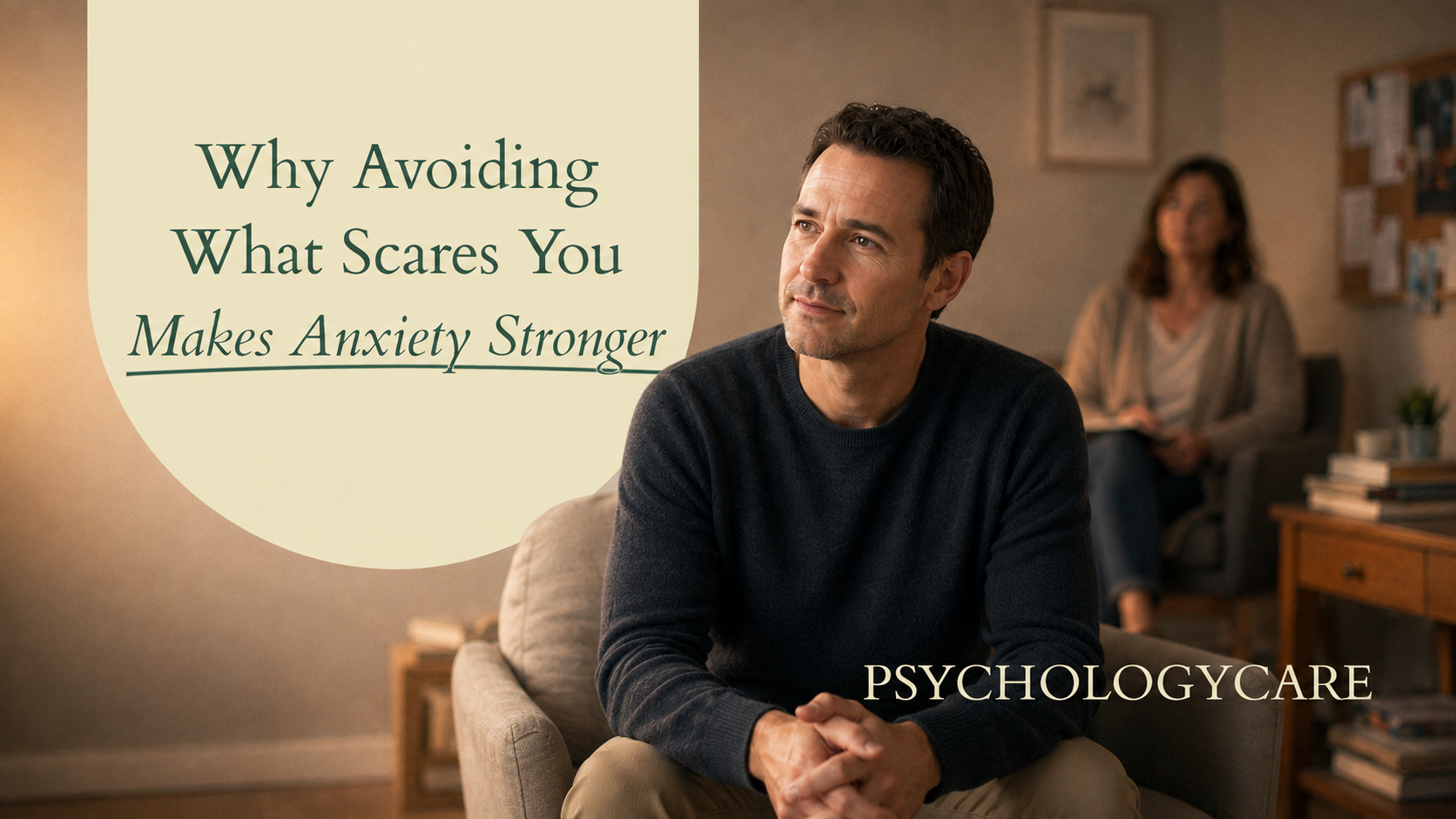
Avoiding situations that make you anxious may provide immediate relief. However, avoidance can sometimes reinforce anxiety because you never get the opportunity to discover that you can manage the situation.
For example, avoiding social events may reduce anxiety in the short term, but over time it can make social situations feel increasingly difficult.
While anxiety can feel overwhelming, there are strategies that may help reduce its intensity and improve your ability to cope.
When you notice yourself worrying, pause and ask:
Is this something that is happening right now, or am I imagining what might happen?
Try to distinguish between a real problem that requires action and a hypothetical concern that may never occur.
You don’t need to force yourself to think positively. Instead, aim to think realistically and consider other possible outcomes.
Anxiety often increases when we try to control things that are uncertain or outside our influence.
Rather than attempting to solve every possible future problem, identify one practical action you can take today.
Ask yourself:
Taking small, achievable steps can help restore a sense of control.
When you feel anxious, your body may be responding as though you are in danger.
Try slowing your breathing, relaxing your shoulders, unclenching your jaw and bringing your attention back to your surroundings.
You might also find walking, gentle exercise, stretching or spending time outdoors helpful.
The aim isn’t to force anxiety to disappear. It is to help your body recognise that it can gradually settle.
Constantly checking, asking others for reassurance, searching the internet for answers or repeatedly reviewing decisions may temporarily reduce anxiety.
However, if you become reliant on reassurance every time uncertainty appears, your confidence in managing anxiety independently may gradually decrease.
Try allowing yourself to sit with some uncertainty without immediately checking or seeking reassurance.
Sleep, regular exercise, healthy eating, social connection and time away from constant demands can all support emotional wellbeing.
If your life is filled with work, responsibilities and little opportunity to recover, it may be worth considering whether some changes to your routine or expectations are needed.
Looking after yourself isn’t a luxury. It is part of maintaining your psychological health.
Occasional anxiety is normal. However, it may be helpful to speak with a psychologist if:
You don’t need to wait until your anxiety becomes severe before seeking support.
A psychologist can help you understand the factors contributing to your anxiety, recognise unhelpful thinking patterns, develop practical coping strategies and gradually regain confidence in situations you may have been avoiding.
Psychological treatment for anxiety is not simply about talking through your problems. It often involves developing a better understanding of how anxiety operates and learning practical skills to change patterns that maintain it.
Depending on your circumstances, treatment may include:
The treatment approach will depend on your individual circumstances, symptoms, goals and preferences.
With the right support, many people find that anxiety becomes more manageable and they are able to return to activities and experiences that they previously avoided.
Yes. Psychology appointments are available via telehealth, allowing you to speak with a psychologist from the privacy and convenience of your own home.
Online psychology can be particularly helpful if you have a busy schedule, live outside a major city, have difficulty travelling, or simply prefer accessing support from home.
Telehealth appointments allow you to work with a psychologist without needing to attend a physical practice, and may make accessing psychological support more convenient.
Feeling anxious all the time can be exhausting. When your mind is constantly anticipating problems and your body rarely feels relaxed, even ordinary daily activities can become difficult.
But anxiety is treatable, and you don’t have to figure everything out on your own.
Understanding why anxiety occurs, learning how to respond differently to anxious thoughts, and developing practical strategies can help you gradually feel calmer, more confident and more in control of your life.
If anxiety is affecting your wellbeing, speaking with a psychologist may be a helpful first step.
PsychologyCare provides psychological services on the Gold Coast and via telehealth, allowing clients to access professional psychological support in a way that suits their circumstances.
To learn more about our services or arrange an appointment, visit PsychologyCare.





 HealthShare